
Di Legge Consulting supports EU-level research, evaluation and impact assessment work at the intersection of applied AI and policy analysis. The focus is on evidence-intensive tasks: structuring large corpora, identifying regulatory gaps and inconsistencies, and producing modelling-ready inputs for policy option analysis. Work is designed around traceability, human verification checkpoints, and controlled delivery environments where appropriate.

Retrieval-augmented analysis over defined corpora to produce sourced evidence maps, claim-to-source tables, and structured summaries that separate evidence from interpretation.

Obligation mapping and cross-instrument comparisons to identify gaps, overlaps, and implementation or enforcement bottlenecks, with outputs designed for review and reuse.
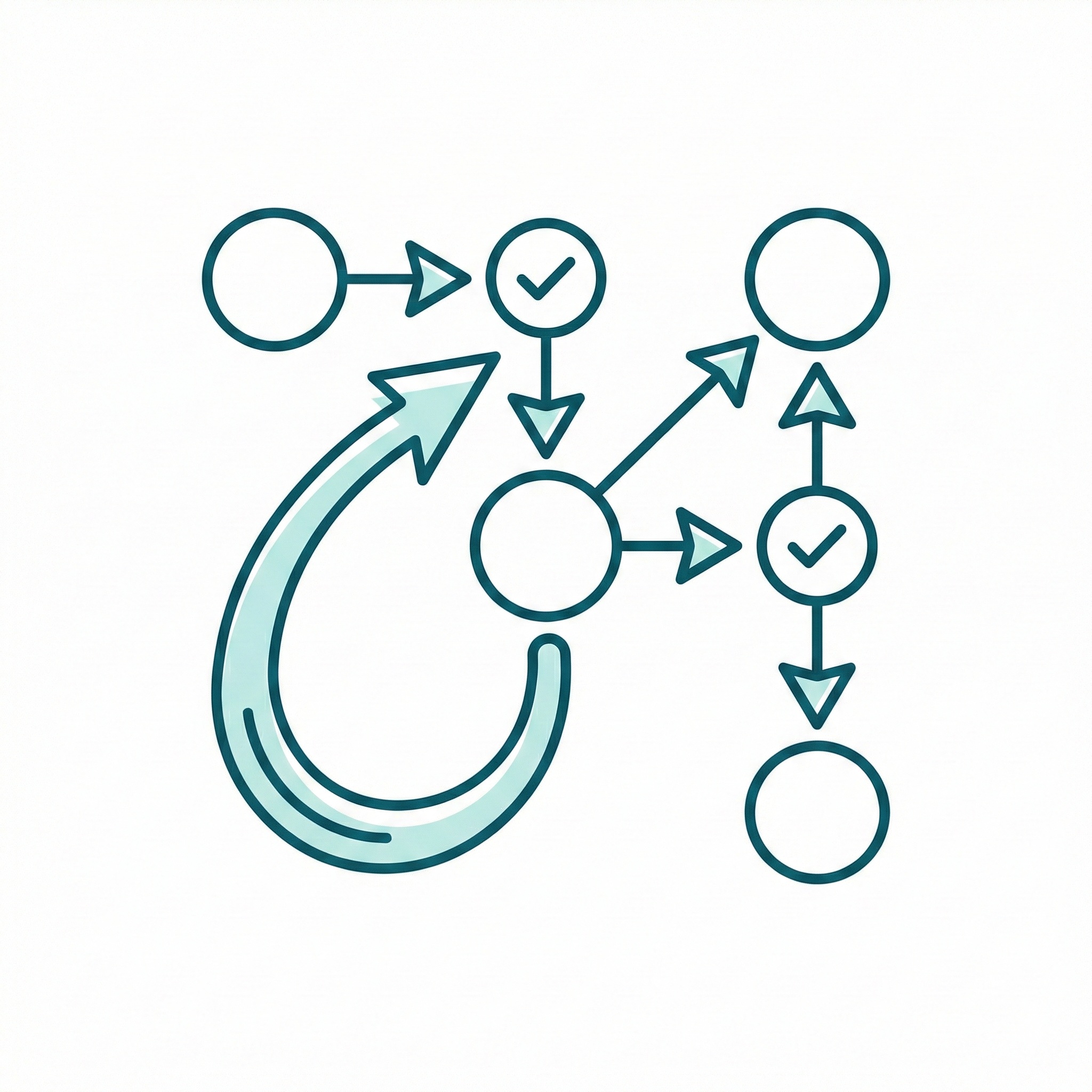
Multi-step desk research workflows run locally where appropriate, producing research logs, validation checkpoints, and evidence packs suitable for policy and regulatory work.

Parameter registers, assumptions logs and sensitivity drivers designed for Better Regulation-aligned modelling and option comparison.
Where the question is primarily data-driven, ad hoc analytical modules can be applied case-by-case. This includes NLP-based extraction and triage, topic discovery and clustering for qualitative corpora, supervised classification for coding and routing, and time-series analysis for monitoring and change detection. Methods are selected based on data availability, decision needs, and auditability requirements.
The operating principle is that model output is not treated as evidence. Substantive statements are grounded in sources and delivered with traceable references, explicit assumptions, and verification steps. Where data sensitivity requires it, delivery configurations can be designed to minimise data transfer and preserve control of intermediate artefacts.
A selection of publicly available studies and reports illustrates the types of policy questions and deliverables supported, including behavioural research in consumer policy, enforcement and market surveillance studies, tax compliance cost analysis, and emerging technologies in customs control.
View case examplesFor an initial discussion, it is typically sufficient to share the policy question, the intended audience for the outputs, and a sample of the relevant corpus or data sources. Scoping focuses on deliverables, constraints, and a proportionate assurance approach.